

Are you a BCBA in Ontario? The rules have changed. Learn more.
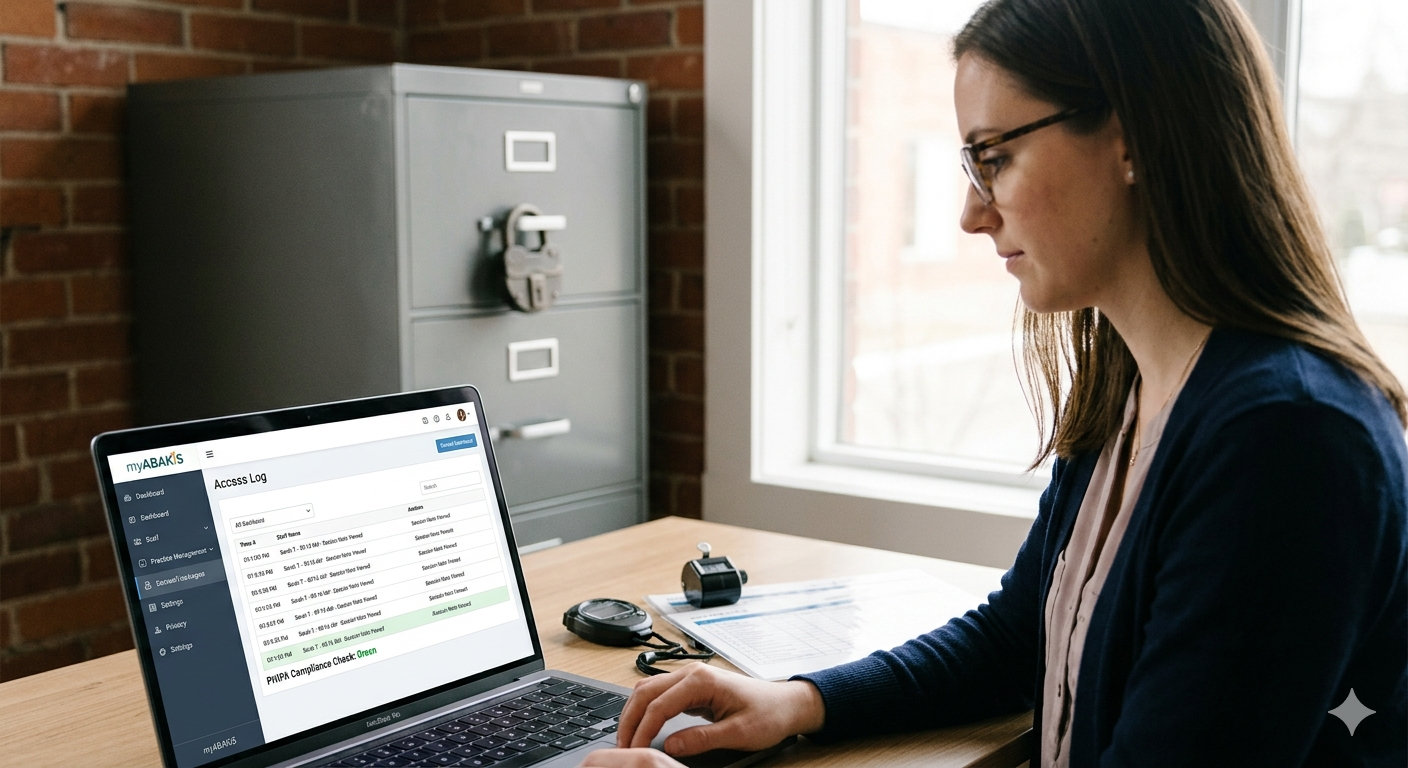
For many independent BCBAs, a heavy-duty locked cabinet feels like the gold standard for data security. You might think that because your client binders are behind two locks, you’ve fulfilled your duty of “patient data protection”. However, physical security is only one small piece of the compliance puzzle.
A locked cabinet protects against theft—but it does nothing for access logging, breach notification timelines, or the right of clients to request corrections. In Ontario, the Personal Health Information Protection Act (PHIPA) requires all three.
Compliance isn’t just about “safety”; it’s about accountability and accessibility. To maintain PHIPA compliance, you must move beyond preventing unauthorized access and start ensuring that authorized access is tracked and managed.
Under PHIPA, “ABA data security” requires more than just a key. Practitioners must adhere to several critical rules:
At myABAKiS, we designed our platform for “Scaling with Simplicity” clinics and independent practitioners who cannot afford a full-time compliance officer. We provide a “HIPAA compliant ABA software” solution (that meets PHIPA standards) to handle the heavy lifting for you.
Our software automates access logging, provides real-time clinical visibility, and ensures your records are “complete and accessible” as required by law. Instead of wasting hours on “manual data entry and correcting errors,” you can focus on clinical outcomes knowing your data is secure and compliant.
Don’t let a false sense of security put your license at risk. Standardize your practice with a “secure ABA software” that does more than just lock a door.
Check to see if your office is on track for PHIPA compliance with our 14-point Rapid PHIPA Assessment Checklist.
Request a Demo to see how myABAKiS provides compliance certainty and security for your practice.
