

Are you a BCBA in Ontario? The rules have changed. Learn more.
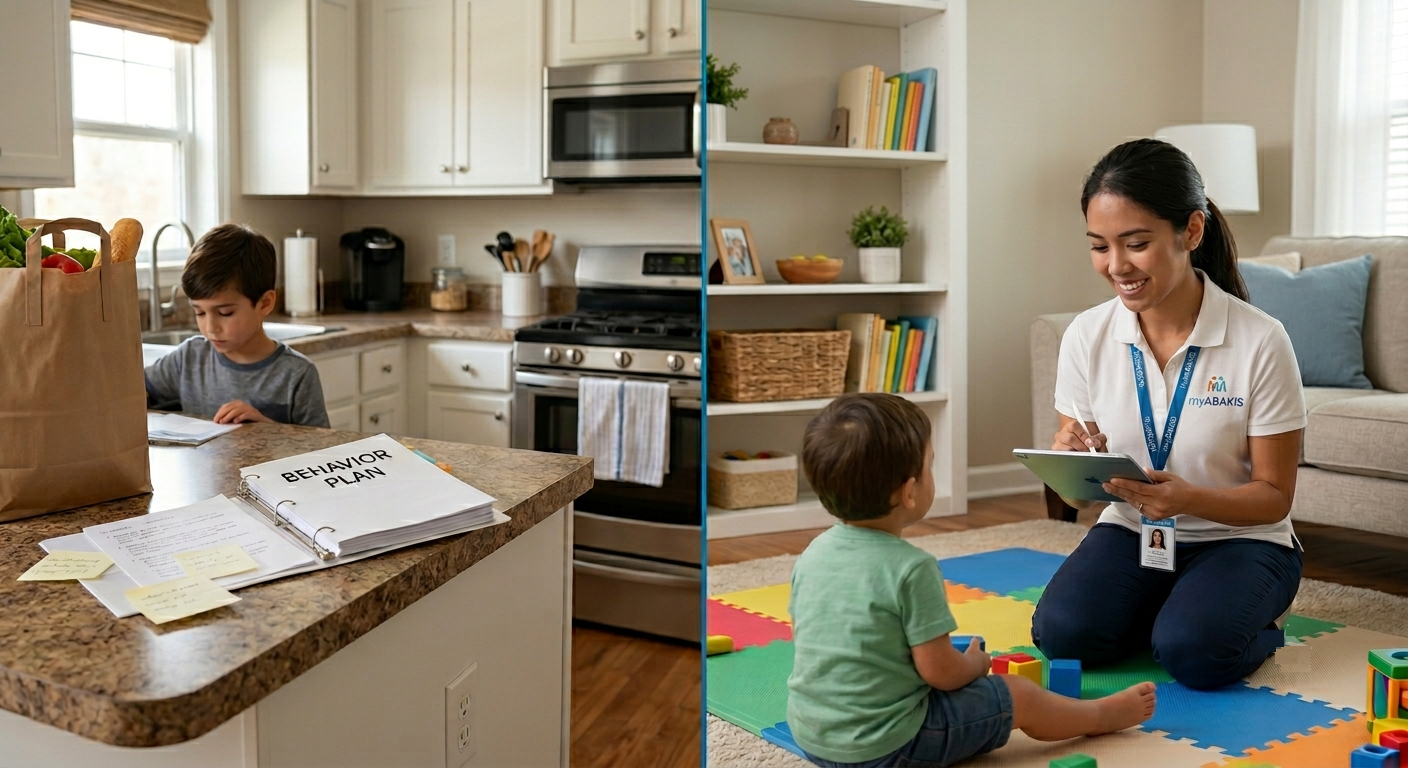
Being PHIPA compliant is not that hard, until real life shows up. When you leave a printed behavior plan on a kitchen counter while helping a client regulate, discuss real-time session data with a sibling in earshot, or carry an open client folder through a busy apartment building lobby, you aren’t trying to break the law. However, under the Personal Health Information Protection Act (PHIPA), these common slip-ups are classified as incidental disclosure—and protecting against them is entirely your responsibility.
For community-based and in-home Board Certified Behavior Analysts (BCBAs) regulated under the College of Psychologists and Behaviour Analysts of Ontario (CPBAO), privacy compliance isn’t just about avoiding a hypothetical data breach. It is a daily, structural challenge.
In a busy, uncontrolled home environment, juggling a clipboard, token boards, and timers while protecting Personal Health Information (PHI) can feel nearly impossible. Here is why incidental disclosure occurs, why Ontario regulators care deeply, and how transitioning to secure ABA software eliminates your vulnerability.
By definition, an incidental disclosure is an unintentional release of PHI that occurs as a side effect of otherwise permitted actions.
When you practice inside a clinic, you operate within a controlled space with locked filing cabinets and secure perimeters. In a client’s home, that control vanishes. Traditional paper documentation and binder systems expose you to three primary vectors of incidental disclosure:
Both PHIPA and the CPBAO guidelines emphasize that health information custodians must take “reasonable steps” to ensure PHI is protected against unauthorized viewing or disclosure.
If a complaint is lodged regarding sloppy data management in the field, the consequences can paralyze a growing practice:
The CPBAO holds practitioners to stringent ethical expectations. Failing to protect a client’s records—even by accidentally leaving progress notes behind at a residential home—can spark a professional misconduct review, jeopardizing your registration.
Under PHIPA, if a privacy breach occurs (including a stolen clipboard or an exposed clinical evaluation folder), you may be legally required to notify the affected family and report the incident directly to the Information and Privacy Commissioner (IPC) of Ontario.
For small to medium-sized practices, trust is your primary business asset. A single public compliance infraction can destroy your relationships with families, schools, and referral networks.
The simplest way to prevent incidental disclosure is to remove physical paper from the home altogether. Moving your data collection, session notes, and BIP targets into a cloud platform drastically mitigates compliance risks.
Standardizing your field teams on PHIPA compliant ABA software protects client privacy in several key ways:
You shouldn’t have to choose between executing dynamic, easy ABA data collection and meeting your rigorous PHIPA obligations. By ditching the paperwork and embracing a clean, digital ecosystem, you give your therapists tools that let them focus completely on the session while giving your administrators total peace of mind.
Protect your clinical files, respect your families’ privacy, and ensure your practice satisfies every CPBAO expectation.
Are you ready to audit your current security practices and remove paper liability from your field operations?
Book a Demo and Strategy Session with myABAKiS to discover how our streamlined platform delivers seamless compliance and elite data security for scaling clinics.
